
 Tweet
Tweet
Not really photography related..but this might be of interest to some here.
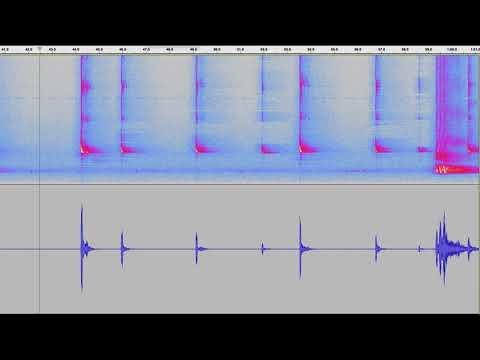
After seeing some bats in our garden at dusk for some time now I got interested in finding more about them. This summer, I managed to get a cheap full spectrum audio logging device called an AudioMoth to log the bat calls through the night. The basic device was about £60 but I spent about £100 after adding a waterproof case and shipping. This device can be configured to gather audio data between dusk and dawn and I get a load of 55 second duration WAV files about 15Gb of data total on an SD card from the device. I then analyse these files with some Python computer scripting in my Mac to find the files which might contain bat calls (it looks for peaks at frequencies between 40Khz - 60Khz). I submit some of this data to a British Trust for Ornithology site (yes, they’re also interested in bats!) online (BTO Acoustic Pipeline) and their system does some species ID on the files and sends me the results (it is a citizen science project run by BTO). The bats we get are mostly Common Pipistrelle but I’ve had some others crop up in the recordings. It has been an ongoing project and it will be interesting to see how long the bats stay active into the winter.
I have a video here of some of the bat calls slowed down with the spectrograms of the calls if anyone is interested:
After seeing some bats in our garden at dusk for some time now I got interested in finding more about them. This summer, I managed to get a cheap full spectrum audio logging device called an AudioMoth to log the bat calls through the night. The basic device was about £60 but I spent about £100 after adding a waterproof case and shipping. This device can be configured to gather audio data between dusk and dawn and I get a load of 55 second duration WAV files about 15Gb of data total on an SD card from the device. I then analyse these files with some Python computer scripting in my Mac to find the files which might contain bat calls (it looks for peaks at frequencies between 40Khz - 60Khz). I submit some of this data to a British Trust for Ornithology site (yes, they’re also interested in bats!) online (BTO Acoustic Pipeline) and their system does some species ID on the files and sends me the results (it is a citizen science project run by BTO). The bats we get are mostly Common Pipistrelle but I’ve had some others crop up in the recordings. It has been an ongoing project and it will be interesting to see how long the bats stay active into the winter.
I have a video here of some of the bat calls slowed down with the spectrograms of the calls if anyone is interested:


Comment