
 Tweet
Tweet
 OM-1 Mark II reflections now the dust has settled
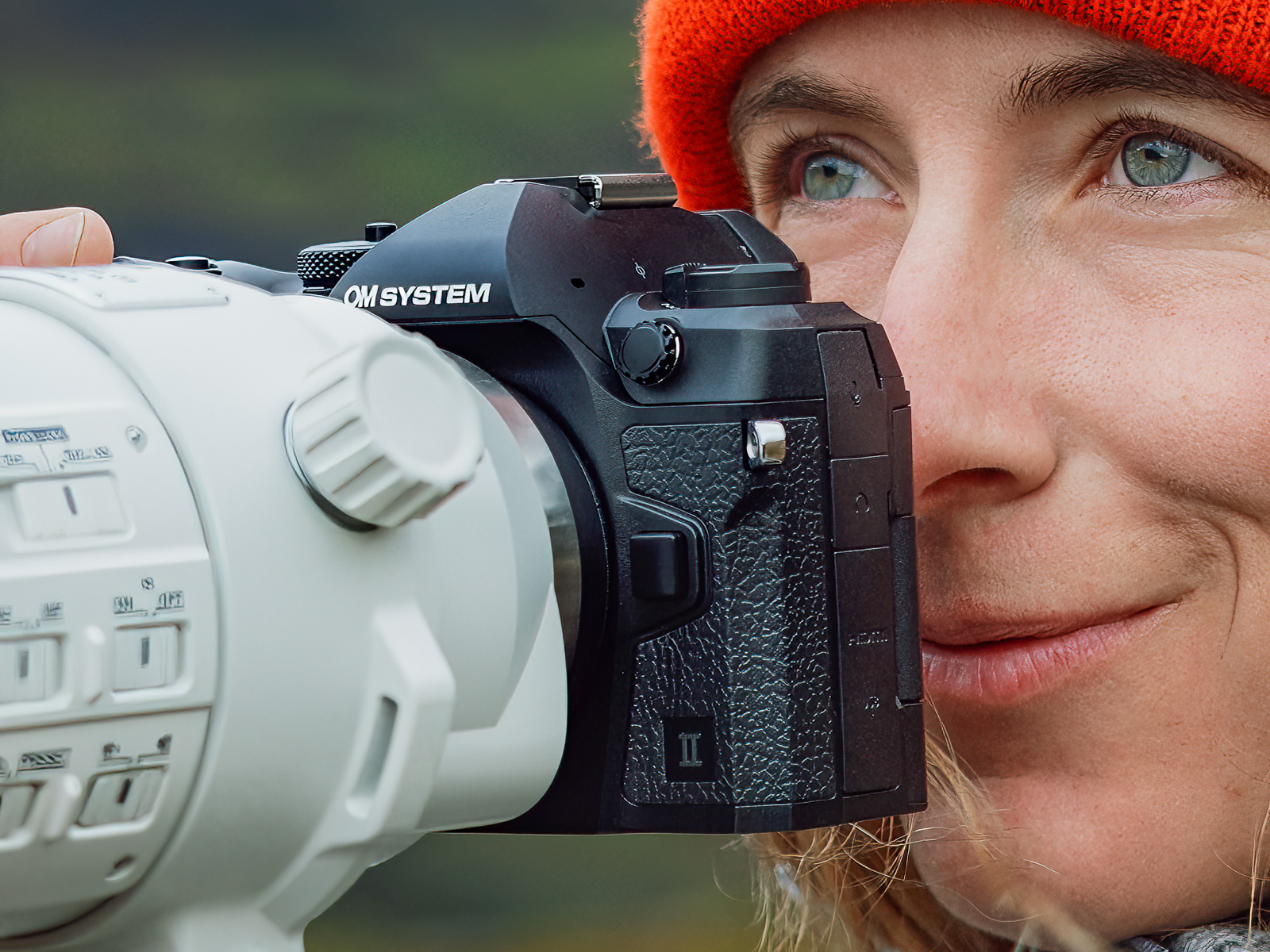
It's been very interesting to soak up the response to the OM System news over the last 24 hours. For what they are worth, here are some of my personal reflections on the OM-1 Mark II. By the way, that's not me in the photo
 - it's one of the lifestyle PR shots press were supplied with.
Dare I say it, I am probably slightly defensive of OM System by nature, but above all, fact and logical supposition are very important to me.
To start with, it's only two years since the original OM-1 was launched. By all accounts, it has been a real success. Time stands still for nobody, but we might not have had an OM-1 replacement this year at all as product cycles tend to be 3-yearly.
Yes, the hardware has had very few changes applied, but it's already a very accomplished design. OM System has to operate differently to the way Olympus used to. Change for change's sake is not really an option any more. At the same time the company has to do what it can to remain competitive. OM System has responded to the constructive criticism it has received regarding the original OM-1. Little things, like being able to re-program the Menu button to the right side of the back of the camera, to enable one-handed operation, are evidence of this.
I know there has been concern that OM System is all gung-ho for bird photographers at the expense of other genres, but high on the list of features added or improved are those that will be welcomed by landscape, macro and even people photographers (street and candid photographers).
- LiveND has become even more useful, with an exra stop of darkening now available.
- Live GND, is a new and unique-to-OM-1 Mark II tool for applying Live ND graduated filters at the time of capture, using the touch screen to position the level and tilt.
- Doubling the memory buffer combined with improved algorithms means focus stacking and bracketing results in less waiting around for the camera to consolidate each image, as well as enabling around double the number of sequential shots to be rattled off before the camera stalls.
- 80 and 50 megapixel High Res Shot modes can now be recorded in 14-bit tone.
- Not only should we expect more reliable subject recognition and AF reliability, the addition of AI-trained recognition of people is, hopefully, of use to anyone who photographs - people!
- Our typical social profile here on the E-Group means we may not all realise the importance of being able to shoot video in vertical format, but have you looked at YouTube and social media in general, recently?
Meanwhile, improved AF (and the buffer increase) suggests that wildlife photographers will be kept happy, too. And let's not forget the ability to avoid sequential shooting screen black-out at even slower frame rates.
The OM-1 Mark II is very much an intermediate upgrade. Going back to the old OM film DSLR days, I'd have called it an OM-1n.
Pricing is a bit contentious - the SRP has risen by £500. None of us welcome price rises, but we live in inflationary times. We have been through this process many times before, so let's hope OM System has built its pricing to be discounted later. Some lucky ones here will see that the new spec. is worth upgrading for, and I know a few of you have placed orders already.
Perhaps the thorniest issue has to be the question of firmware upgrades for the original OM-1. OM System has to be very careful. Loyalty and goodwill from its faithful are its lifeline. Vague and unsubstantiated hints from OM System sources that much of the software-based OM-1 Mark II improvements can't be applied to the original OM-1, sounds disingenuous.
It's now an accepted norm that connected digital devices like phones, cameras, even cars, can routinely receive over the air updates that can often add functionality. If OM System really can't offer some of the new functionality to users of the original OM-1, because of fundamental technical limitations, OM System needs to be up-front and honest about it.
I am actually sympathetic towards OM System regarding a requirement to adequately differentiate the OM-1 and OM-1 Mark II. But blocking access to software upgrades that are technically possible, for strategic marketing, is not right. I hope that, in reality, we're just experiencing a delay before some of the new features do become available to the original OM-1. Another alternative, which I think could be acceptable, is that upgrades are made available for a suitable fee. Not everyone will need the upgrades but I do know that some have expressed a willingness to pay towards accessing them.
Let's see what happens.
But above all, I still rejoice in the fact that the OM-1 Mark II is a fabulously versatile and capable camera, which has built on another fabulously versatile and capable one!
Ian




Comment