Announcement

Collapse
No announcement yet.

Sensor Sizes and Diffraction

Collapse
X
 
  • Filter
  • Time
  • Show
Clear All
new posts

  • Sensor Sizes and Diffraction

    Hi

    Has anyone here got a Panasonic G3? I'm asking because I see that Panasonic have released the GX1 today and that, I believe, has the same 16 mega-pixel sensor as the G3. I very much like the GX1 form factor (I liked the GF1 too) and could be interesting in getting one if Panasonic come up with their rumoured 12-35 and 35-100 F2 lenses next year.

    If you've got the G3 can you tell me how you get on with it. A while back Ian published an article on Dpnow on camera resolution suggesting that on a 16 MP 4/3rd sensor diffraction would degrade an image from f5.6 onwards: it was f8 on a 12 MP sensor. See: http://dpnow.com/7644.html

    I would like to know if you find this to be the case in practise, or does the higher resolution of the sensor compensate for loss of sharpness due to diffraction at f8?

    many thanks

  • #2
    Re: Sensor Sizes and Diffraction

    Very interesting question, which hopefully Ian can show comparative images to answer.

    That's the first time I've heard about the posibility of f/2 zoom lenses for
    MFT, which if up to Olympus f/2 standards would be of very real interest to me.
    Graham

    We often repeat the mistakes we most enjoy...

    Comment


    • #3
      Re: Sensor Sizes and Diffraction

      Originally posted by Graham_of_Rainham View Post
      Very interesting question, which hopefully Ian can show comparative images to answer.

      That's the first time I've heard about the posibility of f/2 zoom lenses for
      MFT, which if up to Olympus f/2 standards would be of very real interest to me.
      If you read this interview with Panasonic, on page 3 they refer to the planned 12-35 and 35-100 for release some time next year. They don't say f2, but that's what the 4/3 rumour site has speculated and they have been right about other products, notably the GX1. Like you, I'd be seriously interested in some f2 zooms lenses especially if the size was right i.e weren't huge:

      Comment


      • #4
        Re: Sensor Sizes and Diffraction

        I've read a hell of a lot of reviews on m43 lenses, and they all seem to suggest that diffraction kicks in at around F11. The m43 lenses also appear to be at their optimal aperture much earlier than other systems - around one stop down from wide open is the best you'll get. Some do even better, with the Panasonic 20mm F1.7 being at it's optimal at around F2.2!

        I think the constant F2 for the Panasonic zooms is wishful thinking rather than anything else - a few techy people on other forums have calculated the required size, and for them to be F2 would apparently mean they would be of an unacceptable size and weight.

        We've all seen the size of the Olympus F2 lenses, and the basic physics don't change with a sensor of the same size....

        Comment


        • #5
          Re: Sensor Sizes and Diffraction

          Originally posted by DekHog View Post
          I've read a hell of a lot of reviews on m43 lenses, and they all seem to suggest that diffraction kicks in at around F11. The m43 lenses also appear to be at their optimal aperture much earlier than other systems - around one stop down from wide open is the best you'll get. Some do even better, with the Panasonic 20mm F1.7 being at it's optimal at around F2.2!

          I think the constant F2 for the Panasonic zooms is wishful thinking rather than anything else - a few techy people on other forums have calculated the required size, and for them to be F2 would apparently mean they would be of an unacceptable size and weight.

          We've all seen the size of the Olympus F2 lenses, and the basic physics don't change with a sensor of the same size....
          Oh well, a bit of wishful thinking doesn't hurt! Even if the lenses were something like f2-3.5/4 and a reasonable size then I'd could still be interested. Interestingly though, the Panasonic 7-14mm f4 is considerably smaller than the Olympus 4/3 version.

          As to diffraction, your reply has confused me somewhat. You say that the reviews you've read say diffraction kicks in around f11 yet Ian's article suggested that for a 16 MP 4/3 sensor it would have an effect from f5.6, whereas it's f8 on a 12 MP 4/3 sensor.

          I'm not saying that you're wrong, just that your response and Ian's article have left me scratching my head a bit.

          Comment


          • #6
            Re: Sensor Sizes and Diffraction

            I've got a G3 and it, along with the GH2, certainly brings out the best in lenses. As to diffraction, well, I don't pixel-peep, but I've not noticed any image degradation at say f11, which is the smallest I've probably used. Mainly down to lack of light round here!

            However, Derek is right in saying that they are very sharp from almost wide-open. In some cases such as the Oly 45mm and the Panny 20mm, from absolute wide-open.

            I am however gradually stopping using all zoom lenses except the Panny 7-14, simply because of wide maximum apertures on primes compared with zooms.
            Stephen

            A camera takes a picture. A photographer makes a picture

            Fuji X system, + Leica and Bronica film

            My Flickr site

            Comment


            • #7
              Re: Sensor Sizes and Diffraction

              Originally posted by DekHog View Post
              I've read a hell of a lot of reviews on m43 lenses, and they all seem to suggest that diffraction kicks in at around F11. The m43 lenses also appear to be at their optimal aperture much earlier than other systems - around one stop down from wide open is the best you'll get. Some do even better, with the Panasonic 20mm F1.7 being at it's optimal at around F2.2!

              I think the constant F2 for the Panasonic zooms is wishful thinking rather than anything else - a few techy people on other forums have calculated the required size, and for them to be F2 would apparently mean they would be of an unacceptable size and weight.

              We've all seen the size of the Olympus F2 lenses, and the basic physics don't change with a sensor of the same size....
              f/11 is being very optimistic for diffraction on Micro Four Thirds!

              On some lenses resolution starts to drop by f/5.6 but personally I feel the actual tipping point is f/6.3-7.1. But the drop off is gradual until f/16. There is quite a big drop at f/22.

              I have some MTF test shots taken with a G3 somewhere I think - I will try to dig them out and process them.

              Ian
              Founder and editor of:
              Olympus UK E-System User Group (https://www.e-group.uk.net)

              Comment


              • #8
                Re: Sensor Sizes and Diffraction

                Ian, but surely the maximum aperture of the lens has some bearing on this also? A lens with a maximum aperture of F1.7 is (to my way of thinking) likely to show diffraction earlier than a zoom with a F4-5.6 maximum aperture - the zoom would mean diffraction kicking in as soon as you stopped it down from wide open!

                Comment


                • #9
                  Re: Sensor Sizes and Diffraction

                  Originally posted by DekHog View Post
                  Ian, but surely the maximum aperture of the lens has some bearing on this also? A lens with a maximum aperture of F1.7 is (to my way of thinking) likely to show diffraction earlier than a zoom with a F4-5.6 maximum aperture - the zoom would mean diffraction kicking in as soon as you stopped it down from wide open!
                  Well No, sorry

                  The amount of diffraction is set by the ratio of the wavelength of light/aperture and is measured as an angle. So it's a point at the time it passes the aperture blades and a circle when it hits the sensor, the size of the circle (the Airy disc) is the angle * focal length.

                  For any 100mm lens then for a Fnumber of 5.6 the aperture will be the same, regardless of what the widest possible aperture is, so at F5.6 the size of the Airy disc on the sensor will be the same.

                  So the zoom at maximum focal length will show diffraction limitations as soon as you stop it down.

                  Or at least it would, but the Anti-Alias filter will already have blurred the image a bit to prevent moire so your sensor is not resolving at it's a theoretical capicity anyway, so you will not see any diffraction effects until the lens is stopped down further.

                  I really recommend reading the two articles on Diffraction and Lenses published by Cambridge Colour, http://www.cambridgeincolour.com/tut...hotography.htm

                  And particularly the last of the first article Are smaller pixels somehow worse and the conclusion of the 2'd article.

                  What theoretically happens with diffraction is a lot more clear cut than what can be observed in pictures (even at 100%). A lot more things happen in the optical system to reduce resolution than just diffraction.

                  Bear in mind that zooms are unlikely to resove as well as a prime lens, so whilst a zoom and a prime will have the same degree of diffraction at the same fnumber, it may well be the zoom is not resolving sufficient detail to be diffraction limited. The prime could well be diffraction limited but still show more detail, because the diffraction limitation is only impacting details smaller than the zoom can resolve.

                  Nick

                  Comment


                  • #10
                    Re: Sensor Sizes and Diffraction

                    Cambrigeincolour touch on pixel size and generally speaking smaller pixels produce sharper images. However smaller pixels have smaller light wells and therefor produce less dynamic range and the amplification of the light can create more noise. Newer sensors with smaller pixels are improving the noise issue (dual or quad processing) and it is feasable to mix larger & smaller pixals together to trade both atributes. The limiting factor will always be the lenses the defraction limit is just one issue both cromatic abberations (colour fringing) & distortions come down to optical design and the cost of the glass types as well as physical size to collect more light for fast lenses. All lenses are a compromise with zooms even more so but by comparison to 30 years ago lenses have significantly improved. Some things however we can all do to minimise problems, always fit lens hoods (veiling glare, flares) and understand the sweet spot of your lenses (generally most lenses perform best at f5.6)

                    Comment


                    • #11
                      Re: Sensor Sizes and Diffraction

                      The relationship between sensor pixel pitch and noise and/or dynamic range is not very solid. It looks like the more densely packed Olympus E-M5 16MP sensor is less noisy and offers higher dynamic range than the older 12MP sensor. There are various factors to consider. So-called fill-factor is one; basically how much of the surface area of the sensor can be dedicated to light gathering. Older CMOS sensors were bad because lots of circuitry on the surface of the sensor limited the fill-factor. In fact CMOS started off with a reputation for low quality noisy imaging. But with refined designs and fabrication techniques, including so-called back-lit CMOS sensors, CMOS now has a reputation for very low noise. Electronic noise is another factor - if you have to send the minute voltages from the sensor to another chip for processing more noise will be added to the signal than if the processing was done on the sensor itself. Microlenses and other contributory factors also figure. So, rather bizarrely, sensor quality is actually increasing in terms of noise and dynamic range despite pixel pitch reducing as sensor get crammed with ever more pixels. But one thing increased resolution can't escape from is a tightening of the diffraction limit. A 12 megapixel full frame Nikon D700 has a diffraction limit of around f/16. But the new D800 at 36 megapixels will be limited at just f/9. The diffraction limit for 12MP Four Thirds/Micro Four Thirds cameras is about f/7.1, with the increased resolution of the E-M5 and other 16MP Micro Four Thirds cameras a third of a stop wider at f/6.3. I disagree that most lenses perform best at f/5.6. The ZD 50mm f/2.0 macro peaks at around f/3.5, for example. Many modern lenses are designed to work at their best at almost, and sometimes at, widest aperture.

                      Ian
                      Founder and editor of:
                      Olympus UK E-System User Group (https://www.e-group.uk.net)

                      Comment


                      • #12
                        Re: Sensor Sizes and Diffraction

                        Quite by chance!...

                        I had an excuse to compare an E-5 and an E-30 over at DPNow today where I was responding to a prospective Nikon D800 owner who was getting confused by Nikon technical advice concerning diffraction limiting and the presence or absence of an anti-aliasing filter.

                        Basically, I produced a set of comparison shots using an E-30 and an E-5 to see if it was possible to detect a difference in the diffraction limit between same-resolution sensors with different antia-aliasing filter strengths.

                        You can read the article here:


                        Let me know what you think!

                        Ian
                        Founder and editor of:
                        Olympus UK E-System User Group (https://www.e-group.uk.net)

                        Comment


                        • #13
                          Re: Sensor Sizes and Diffraction

                          Having downloaded the images and viewed them side by side, there is, as you say, a noticable difference between the two with the E-5 producing the sharper looking image.
                          Does the weaker AA bring on diffraction faster as the aperture gets smaller?
                          While I am seeing the effects increase as expected, in line with smaller apertures, the rate of change in the effect is far more difficult to assess subjectively and an objective measurement would be needed to convince me that the rate of softening is faster on the E-5

                          E-5 on the LHS & E-30 on the RHS (@f/11)


                          In a link to my other thoughts on diffraction, these images contain far more long wavelength (reds) than the landscape photographer would normally encounter. The greens and blues have a shorter wavelength and as such diffraction is less with these colours. What I have yet to determine is by how much

                          This has certianly has captured my interest.
                          Graham

                          We often repeat the mistakes we most enjoy...

                          Comment


                          • #14
                            Re: Sensor Sizes and Diffraction

                            Ian

                            I said most lenses not ALL lenses, fast lenses are always biased towards the faster aperture as the designers know thats what they are bought for and these lenses are generally more expensive using exotic glass types. A typical f4 zoom will be best at f5.6 Ive tested enough on MTF benches & optical projectors to know it represents a average and most photographers only buy kit zoom lenses which commonly are around this aperture or f3.5 at their fastest.

                            It is possible to build completely flat field, evenly illuminated, fast zoom lenses problem is they cost thousands and generally are only affordable in motion picture and TV productions and cover sensors similar in size to APS-H or 2/3" apart from their optical qualities the mechanical engineering of these lenses is to tolerances stills lenses just do not attain.

                            Comment


                            • #15
                              Re: Sensor Sizes and Diffraction


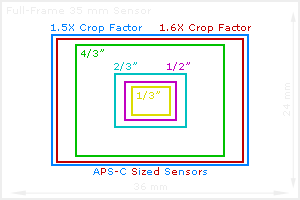
                              This explains better than I can image sensor sizes, pixel size, noise & dynamic range

                              Comment

                              Working...
                              X